Operating Room Information Panel: More Than Just a "Display Screen," But an "Early Warning Station" for Surgical Safety
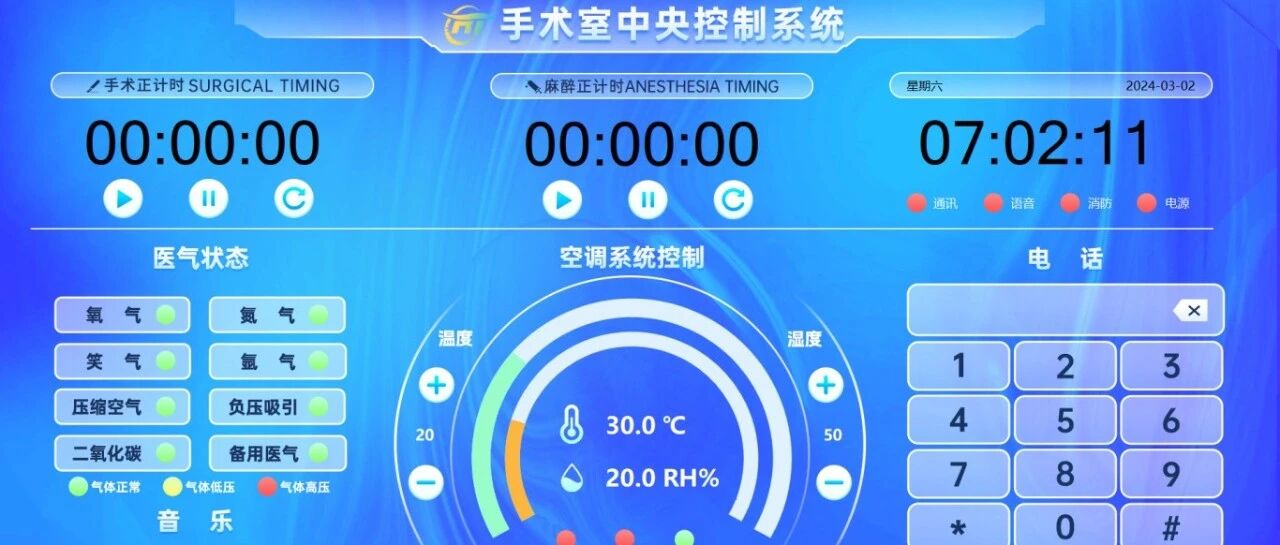
When you walk into a hospital operating room, you may be drawn to core equipment such as the shadowless lamp and the operating table. But there is an "invisible guardian" that is building a solid safety defense for every surgery with precise data and real-time control — it is the operating room LCD information panel.
Many people mistakenly think the information panel is just a "screen that displays the time and the name of the surgery." However, empowered by Rentai Technology, it has long broken free from the single attribute of a "display tool" and become a surgical safety hub integrating real-time monitoring, intelligent control, and risk warning. Today, let us unveil its "multiple roles" and see how this "small panel" shoulders the "great responsibility" of surgical safety.
PART.1
The First Role: A "Real-Time Reporter" of Surgical Data, the First Line of Defense for Information Transparency
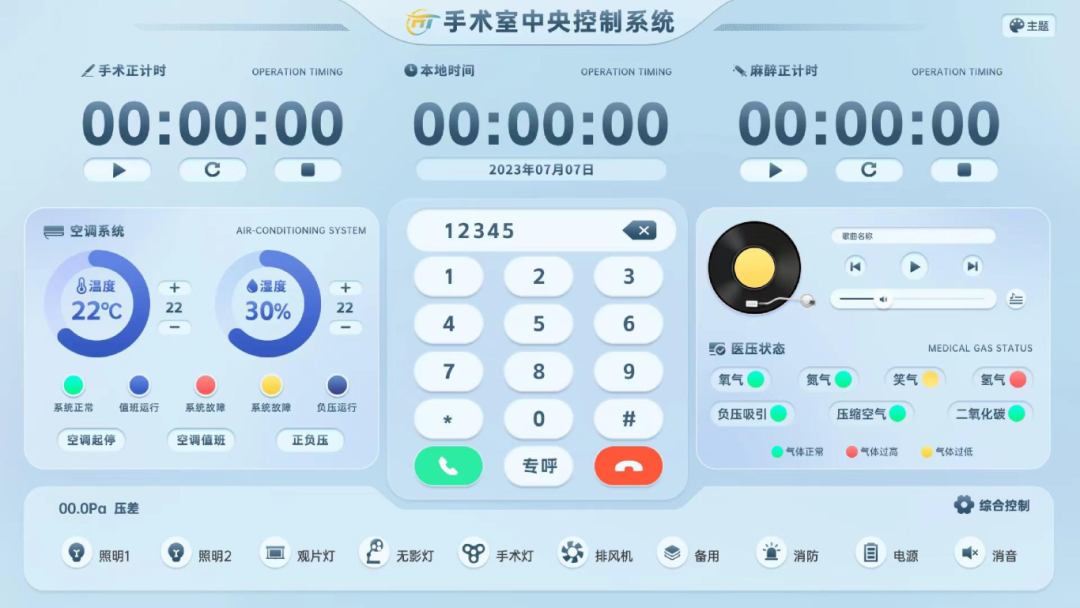
In the operating room, the synchronization of information every second concerns both efficiency and safety. Rentai Technology's LCD information panel acts like a precise "reporter," clearly presenting key data so that both medical staff and patients' families can "have a clear picture."
For the medical team, the dual timing system on the panel serves as the "baton" for the surgical rhythm — the surgery count-up timer and anesthesia count-up timer are accurate to the second, synchronizing key nodes such as the start of anesthesia, the start of surgery, and the completion of suturing in real time, preventing deviations in time recording from affecting the surgical process. At the same time, core information such as the patient's name, hospital admission number, surgery name, lead surgeon, and department is clear at a glance and interconnected with the hospital's HIS and EMR systems, eliminating the need to repeatedly consult paper medical records or switch between computers, thereby reducing information verification time and lowering the risk of human error.
For waiting family members, the panel-linked "synchronized information display screen" is even more of a "reassurance." Through the display terminal at the operating room entrance, family members can see in real time whether the surgery is "in progress," "about to end," and other status updates, replacing the traditional model of "anxiously waiting in the corridor." Some hospitals have reported that after installing information panels, family inquiries caused by "lack of information" decreased by 60%, significantly improving the patient experience.
PART.2
The Second Role: An "Intelligent Steward" of the Operating Room Environment, Detecting and Addressing Hidden Hazards Early
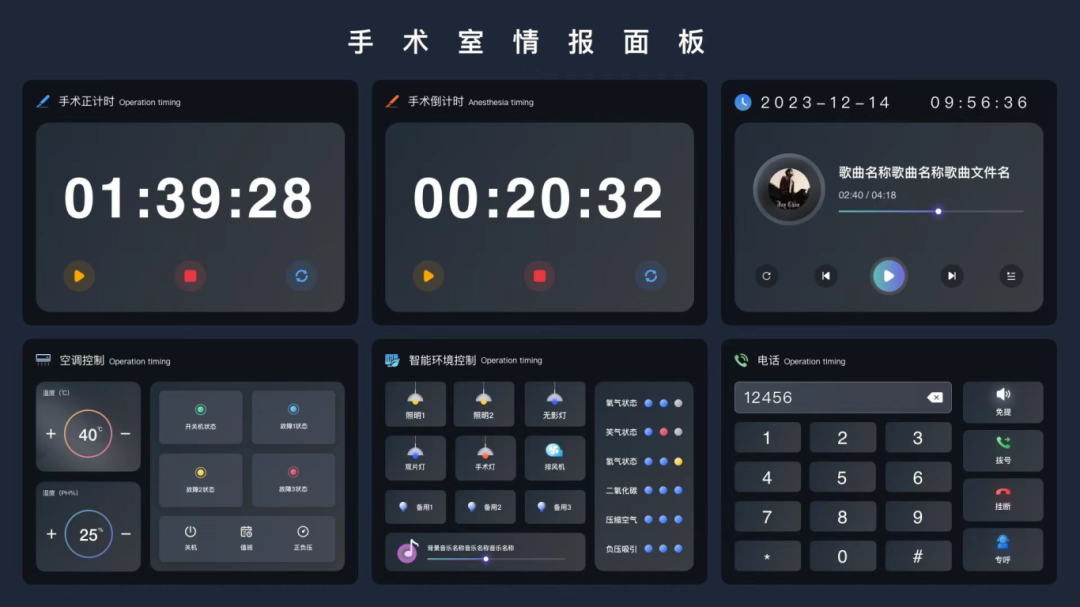
The temperature, humidity, cleanliness, and medical gas pressure in the operating room are "invisible variables" that affect surgical safety — excessively high temperatures may cause fatigue in medical staff, abnormal humidity may affect the precision of instruments, and unstable gas pressure directly threatens patient lives. Rentai Technology's LCD information panel serves as the "intelligent steward" of these variables, capable of real-time monitoring and proactive adjustment, extinguishing hidden hazards in their infancy.
On the panel, you can see the real-time environmental data of the operating room: temperature accurate to ±0.5°C, humidity displayed as RH percentage, clean room pressure differential (Pa) dynamically updated, and even PM2.5 concentration and air cleanliness level can be intuitively presented. Once data exceeds the safe range (such as temperature above 25°C or pressure differential below 10 Pa), the panel immediately issues an audible and visual alarm, simultaneously syncing to the medical workstation to remind staff to make timely adjustments.
Even more thoughtfully, the panel also integrates equipment control functions: by tapping the touchscreen, you can adjust the brightness of the shadowless lamp, switch the film viewer on and off, control the exhaust fan speed, and even manage the air conditioning's "normal operation / duty mode / negative pressure mode." For example, after surgery ends, there is no need to rush around looking for a control panel — you can activate the "disinfection mode" directly on the information panel, allowing the operating room to quickly enter a clean preparation state and reducing the risk of cross-infection.
PART.3
The Third Role: An "Early Warning Sentinel" for Medical Risks, Keeping Hazards at Bay Before Surgery
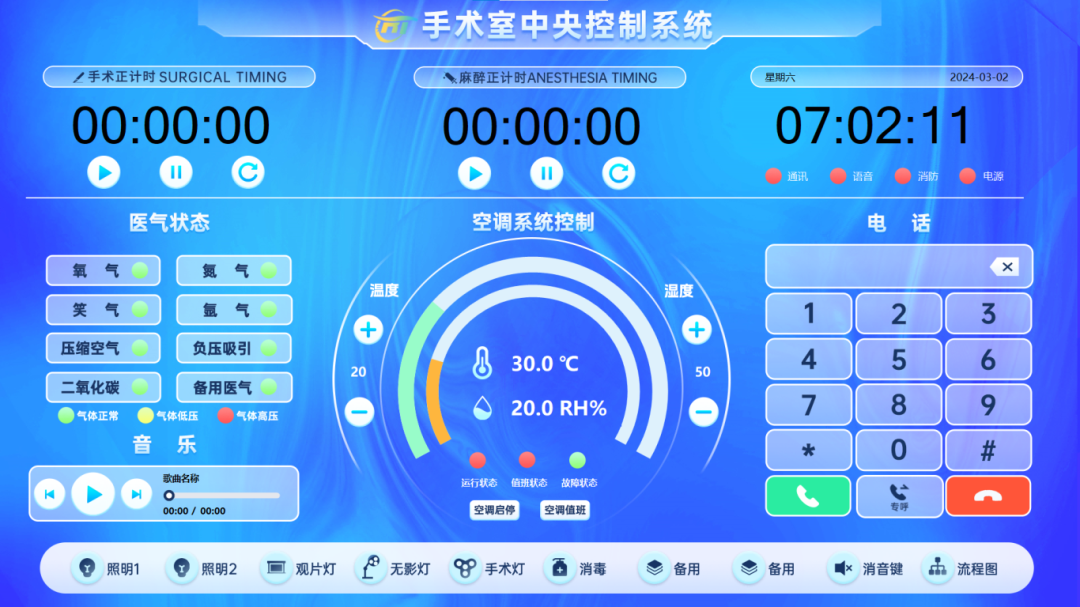
Risks during surgery often hide in "invisible details" — medical gas leaks, air conditioning filter blockages, UPS power anomalies... If these problems are not detected in time, they may lead to serious consequences. Rentai Technology's LCD information panel acts like a keen "early warning sentinel," standing guard for surgical safety through multi-dimensional monitoring.
Its "early warning capability" is reflected in two key scenarios:
· Real-time monitoring of medical gases: The pressure status of gases such as oxygen, nitrogen, compressed air, and negative pressure suction is displayed on the panel with three-color indicators: "normal / low pressure / high pressure." Once a gas pressure is abnormal (such as low oxygen pressure), the panel immediately pops up an alarm and simultaneously sends a text message to the equipment department engineer, ensuring a response within 3 minutes and troubleshooting within 10 minutes, preventing gas problems from interrupting surgery.
· Early warning of equipment faults: The panel is linked with operating room air conditioning, sterilization equipment, etc., and can capture equipment operation data in real time. For example, when the air conditioning filter is clogged, the panel will remind "filter replacement needed" in advance based on "cumulative operating time + pressure differential data." When the ultraviolet disinfection lamp is nearing the end of its service life, it will automatically pop up a replacement prompt, avoiding hospital-acquired infections caused by inadequate disinfection.
A certain Grade A tertiary hospital once encountered the following situation: during a coronary artery bypass surgery, the panel suddenly indicated "insufficient negative pressure suction." The medical staff immediately switched to the "backup medical gas" through the panel, while the equipment department engineer arrived at the scene at the same time. The entire process took only 2 minutes and did not affect the surgery in any way. In the post-event review, the doctor said, "Without this warning, if we had only discovered the lack of suction when the aspirator had no suction power, the consequences would have been unimaginable."
PART.4
The Fourth Role: A "Balance Expert" Between Finished Product and Essence, Adapting to the Needs of Different Hospitals
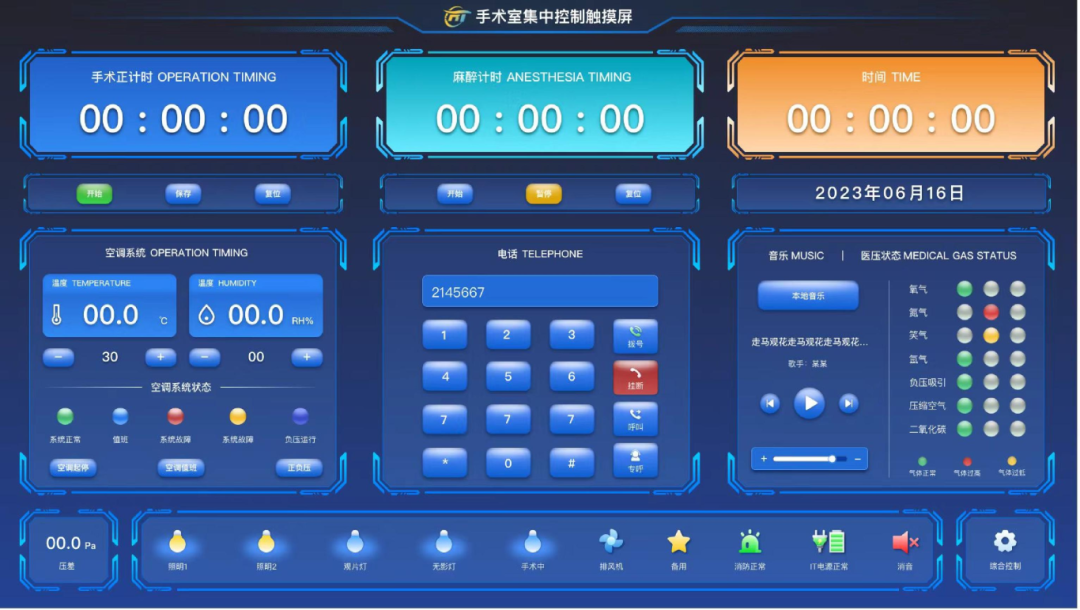
Different levels of hospitals have different budgets and functional requirements for equipment. Rentai Technology did not adopt a "one-size-fits-all" approach, but instead launched "differentiated solutions" for different scenarios, so that every hospital can use an information panel with "high cost performance and strong adaptability."
If you are a Grade A tertiary hospital or a large specialized hospital pursuing comprehensive functions, then the "32-inch / 43-inch intelligent display workstation" is the preferred choice — it not only has basic display and control functions, but also can switch to a white screen with one click (to avoid reflections affecting the field of vision during surgery), record the entire surgical process in panorama, and even install the PACS system to view cloud films, allowing doctors to quickly retrieve patient imaging data during surgery without leaving the operating table.
If you are a county-level hospital or community hospital with a limited budget but an emphasis on core functions, the "six-unit touch panel" will be more suitable. It adopts a modular design, where six functional modules (timing, temperature and humidity, gas monitoring, lighting control, etc.) can be combined arbitrarily. The price is only two-thirds of a traditional LCD panel, yet it can meet basic safety monitoring needs. A county-level hospital director gave feedback: "With less money, we bought the core safety guarantee. This panel was the right choice."
From a "simple display screen" to a "surgical safety early warning station," Rentai Technology's operating room LCD information panel interprets "small device, big role" through technical details. It may not be as conspicuous as the shadowless lamp or as core as the operating table, but every data fluctuation, every alarm prompt, and every precise control is "adding bricks and tiles" to surgical safety.
In the wave of medical digitalization, more and more such "small devices" are becoming the "safety cornerstone" of hospitals. Rentai Technology will also continue to delve into details, enabling the information panel not only to "warn of risks" but also to "predict needs," safeguarding the lives and health of more hospitals and more patients.
If your hospital is also looking for an operating room solution that "balances safety, efficiency, and cost," consider Rentai Technology's LCD information panel — let every surgery have an extra layer of precise protection; let every patient have an extra measure of peace of mind.
END
 仁泰科技
Focusing on medical and elderly care construction, empowering health with intelligence.