Operating Table: A "Surgical Partner" That Saves Effort for Medical Staff and Provides Comfort for Patients — What Design Ingenuity Lies Behind It?
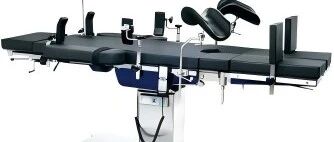
When it comes to surgical scenarios, what often comes to mind first are the medical staff in green scrubs and the sophisticated instruments and equipment, while few people turn their attention to the operating table that "bears life" — the unsung hero silently supporting the entire operation.
A complex surgery often lasts for hours, during which medical staff must maintain highly focused postures while operating; patients, under anesthesia, are completely without self-support and rely entirely on the operating table for a sense of security. To serve simultaneously as an "effort-saving assistant for medical staff" and a "comfortable haven for patients," this table embodies a great deal of little-known design ingenuity. Today, let us unveil the "mysterious veil" of the operating table.
An "Effort-Saving Marvel" for Medical Staff: Humanistic Care Hidden in Every Adjustment
For surgeons and nurses, every bit of physical effort saved during surgery translates into greater focus for precise manipulation. The design of the operating table, starting from the goal of "reducing the burden on medical staff," takes "flexibility" and "precision" to the extreme.
01
Multi-dimensional Adjustment: Enabling Surgical Postures "At Will"
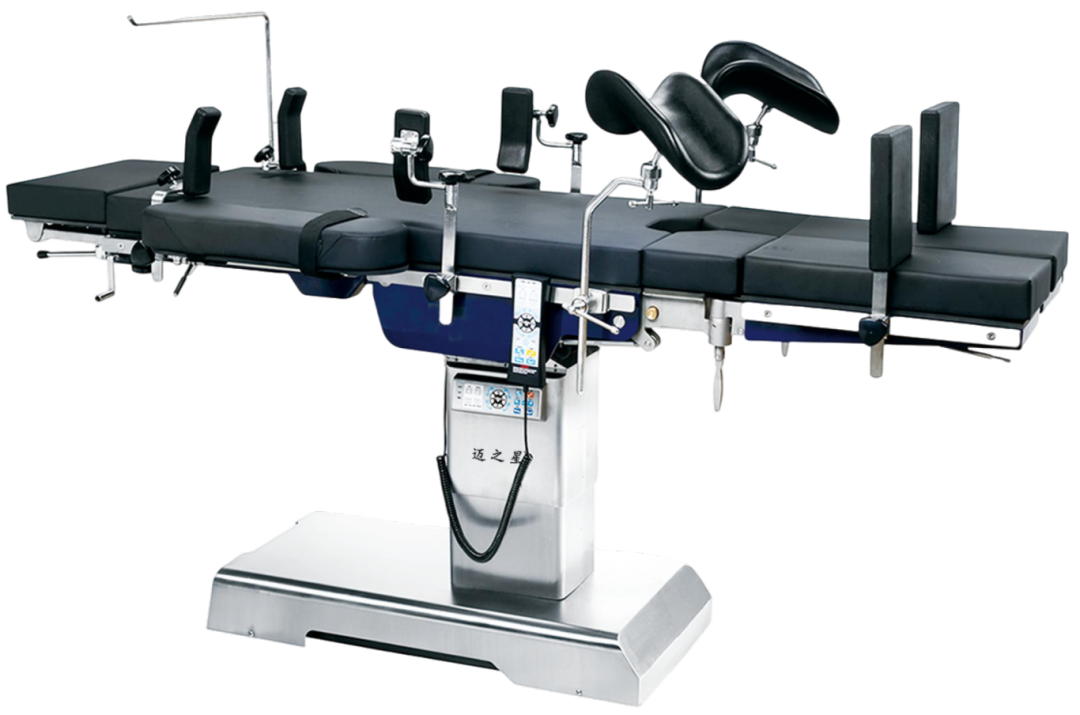
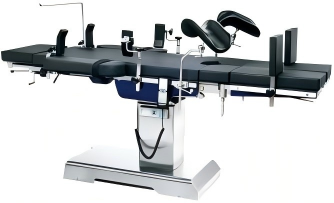
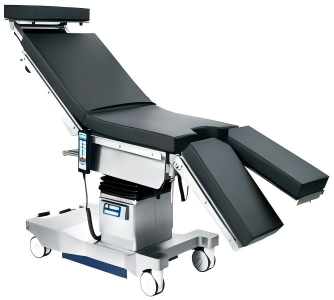
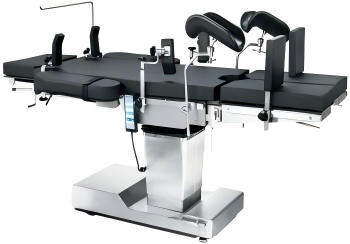
You may have seen medical staff gently press a button and the operating table perform a series of movements such as lifting, lowering, tilting, and folding — this is the work of hydraulic or electric drive systems behind the scenes. Traditional operating tables relied on manual adjustment, which was not only laborious but also likely to interrupt the rhythm of surgery. Today's intelligent operating tables can achieve anterior-posterior tilt and lateral tilt of ±30° through a touch panel or foot switch alone. The tabletop height can be freely switched between 50 cm and 120 cm, and even the patient's head and legs can be individually adjusted to specific angles.
For example, during cardiac surgery, doctors need the patient to be in a head-up, feet-down position to reduce venous return, and the operating table can achieve precise positioning instantly. In orthopedic surgery, the segmented folding function of the tabletop allows the patient's joints to extend naturally, avoiding secondary injuries caused by medical staff manually moving the patient. This "adjust on demand" design means medical staff no longer need to bend over or stand on tiptoe during operations, greatly reducing the risk of lumbar muscle strain and joint injuries.
02
Sturdy Load-Bearing + Flexible Mobility: Balancing "Stability" and "Convenience"
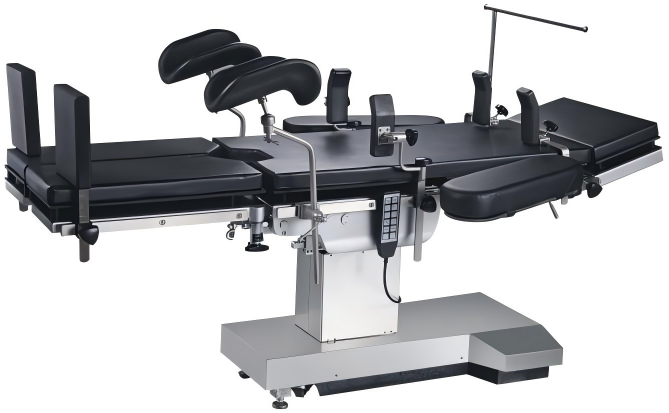
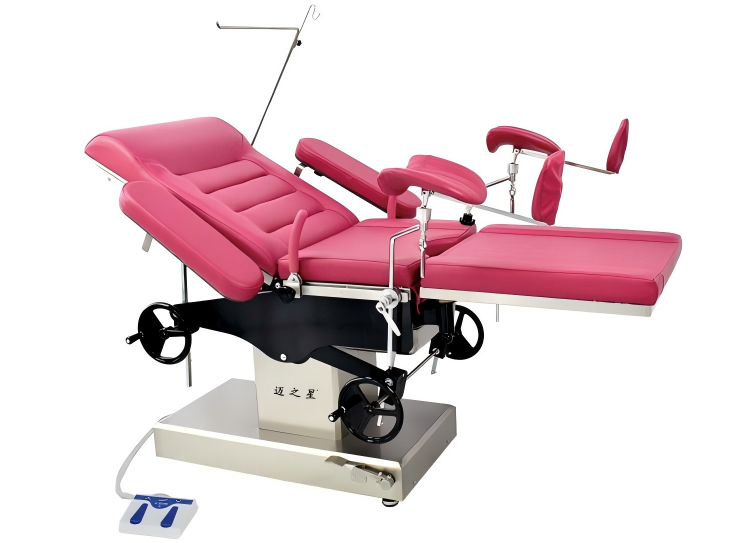
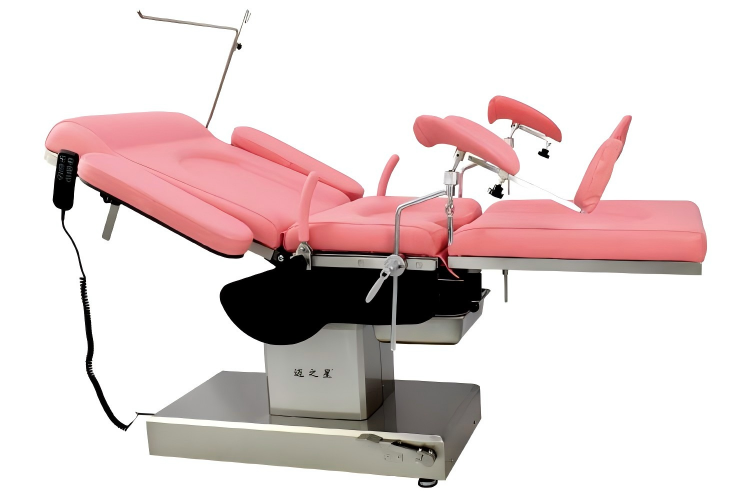
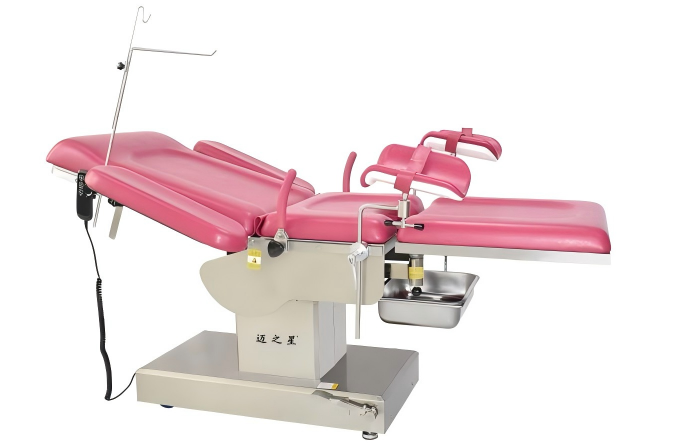
During surgery, the patient's body weight and the placement of surgical instruments place high demands on the stability of the operating table. The frame of a high-quality operating table is made of high-strength alloy steel and can bear a load of over 200 kg. Even during complex surgical procedures, it remains as steady as a rock, preventing any table movement from affecting surgical precision.
However, stability does not mean "bulky." The universal casters at the base of the table feature ingenious design: during routine movement, the wheels are smooth and flexible, allowing a single medical staff member to push the table and transport the patient. Before surgery begins, simply stepping on the brake pedal locks the wheels firmly in place, creating a solid connection with the floor and eliminating any slipping. This design of "light and agile when moving, stable and secure when working" allows the operating table to "move freely" within the operating room.
03
Minimalist Control Interface: Never "Dropping the Ball" at Critical Moments
During surgery, every second counts and the "ease of understanding" of the control interface is of utmost importance. The control buttons on an operating table are often designed with large icons and clear labels, with frequently used functions such as lifting and tilting placed in the most prominent positions, allowing medical staff to operate them quickly without special training. Some high-end operating tables also support customizable control panels, which can prioritize the display of frequently used functions according to the surgical needs of different departments, further improving operational efficiency.
2
The Patient's "Comfortable Haven": Feeling Warmth Amid Cold Instruments
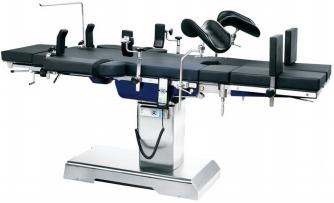
For patients, the operating table is not just a "bed," but the only "support" during surgery. From the nervousness and unease before surgery to the unconscious state during the procedure, the design of the operating table conveys warmth through details.
 Mattress Material: A "Sense of Security" with Just the Right Firmness
The surface of the operating table is not an ordinary mattress, but is made of high-density memory foam or medical-grade PU material, with firmness repeatedly calibrated—neither so hard as to cause pressure ulcers in patients, nor so soft as to cause the patient's body to sink and affect surgical procedures. At the same time, these materials have good breathability and antibacterial properties, and after strict disinfection before surgery, they can effectively prevent cross-infection, allowing patients to receive treatment in a reassuring environment.
For patients undergoing long surgeries, the table surface is also designed with a "pressure dispersion" structure. Through special textures and zoned design, the patient's weight is evenly distributed to various parts of the table surface, reducing local skin pressure and lowering the probability of pressure ulcers. For patients whose surgical sites need to be exposed, the cutout design and adjustable baffles of the table body can fully expose the surgical area while protecting patient privacy, taking into account both humanistic care and surgical needs.

Warming Design: Combating the "Cold Fear" in the Operating Room
To maintain the sterility of the surgical environment, operating rooms are typically kept at low temperatures, which is particularly unfriendly to patients under anesthesia — hypothermia can impair blood coagulation and postoperative recovery. Therefore, many operating tables are equipped with a "constant-temperature heating function." The tabletop can be maintained at a comfortable body temperature of around 37°C, like a "warm bed," keeping the patient's body temperature stable during surgery and reducing the risks associated with low temperatures.
Silent Operation: "Silent Comfort" for Patients
Preoperative tension often makes patients particularly sensitive to surrounding sounds. The operating table is specially designed with an emphasis on "silent" performance. The hydraulic or electric systems adopt noise reduction technology, keeping the noise level during adjustment below 30 decibels, making it almost imperceptible. This "silent adjustment" can effectively reduce patients' anxiety, allowing them to undergo surgery in a relatively quiet environment.
Operating Table: A "Surgical Partner" That Saves Effort for Medical Staff and Provides Comfort for Patients — What Design Ingenuity Lies Behind It?
When it comes to surgical scenarios, what often comes to mind first are the medical staff in green scrubs and the sophisticated instruments and equipment, while few people turn their attention to the operating table that "bears life" — the unsung hero silently supporting the entire operation.
A complex surgery often lasts for hours, during which medical staff must maintain highly focused postures while operating; patients, under anesthesia, are completely without self-support and rely entirely on the operating table for a sense of security. To serve simultaneously as an "effort-saving assistant for medical staff" and a "comfortable haven for patients," this table embodies a great deal of little-known design ingenuity. Today, let us unveil the "mysterious veil" of the operating table.
**An "Effort-Saving Marvel" for Medical Staff: Humanistic Care Hidden in Every Adjustment**
For surgeons and nurses, every bit of physical effort saved during surgery translates into greater focus for precise manipulation. The design of the operating table, starting from the goal of "reducing the burden on medical staff," takes "flexibility" and "precision" to the extreme.
**Multi-dimensional Adjustment: Enabling Surgical Postures "At Will"**
You may have seen medical staff gently press a button and the operating table perform a series of movements such as lifting, lowering, tilting, and folding — this is the work of hydraulic or electric drive systems behind the scenes. Traditional operating tables relied on manual adjustment, which was not only laborious but also likely to interrupt the rhythm of surgery. Today's intelligent operating tables can achieve anterior-posterior tilt and lateral tilt of ±30° through a touch panel or foot switch alone. The tabletop height can be freely switched between 50 cm and 120 cm, and even the patient's head and legs can be individually adjusted to specific angles.
For example, during cardiac surgery, doctors need the patient to be in a head-up, feet-down position to reduce venous return, and the operating table can achieve precise positioning instantly. In orthopedic surgery, the segmented folding function of the tabletop allows the patient's joints to extend naturally, avoiding secondary injuries caused by medical staff manually moving the patient. This "adjust on demand" design means medical staff no longer need to bend over or stand on tiptoe during operations, greatly reducing the risk of lumbar muscle strain and joint injuries.
**Sturdy Load-Bearing + Flexible Mobility: Balancing "Stability" and "Convenience"**
During surgery, the patient's body weight and the placement of surgical instruments place high demands on the stability of the operating table. The frame of a high-quality operating table is made of high-strength alloy steel and can bear a load of over 200 kg. Even during complex surgical procedures, it remains as steady as a rock, preventing any table movement from affecting surgical precision.
However, stability does not mean "bulky." The universal casters at the base of the table feature ingenious design: during routine movement, the wheels are smooth and flexible, allowing a single medical staff member to push the table and transport the patient. Before surgery begins, simply stepping on the brake pedal locks the wheels firmly in place, creating a solid connection with the floor and eliminating any slipping. This design of "light and agile when moving, stable and secure when working" allows the operating table to "move freely" within the operating room.
**Minimalist Control Interface: Never "Dropping the Ball" at Critical Moments**
During surgery, every second counts and the "ease of understanding" of the control interface is of utmost importance. The control buttons on an operating table are often designed with large icons and clear labels, with frequently used functions such as lifting and tilting placed in the most prominent positions, allowing medical staff to operate them quickly without special training. Some high-end operating tables also support customizable control panels, which can prioritize the display of frequently used functions according to the surgical needs of different departments, further improving operational efficiency.
**The Patient's "Comfortable Haven": Feeling Warmth Amid Cold Instruments**
For patients, the operating table is not just a "bed," but the only "support" during surgery. From the nervousness and unease before surgery to the unconscious state during the procedure, the design of the operating table conveys warmth through details.
**Mattress Material: A "Sense of Security" with Just the Right Firmness**
The surface of the operating table is not an ordinary mattress, but is made of high-density memory foam or medical-grade PU material, with firmness repeatedly calibrated—neither so hard as to cause pressure ulcers in patients, nor so soft as to cause the patient's body to sink and affect surgical procedures. At the same time, these materials have good breathability and antibacterial properties, and after strict disinfection before surgery, they can effectively prevent cross-infection, allowing patients to receive treatment in a reassuring environment.
For patients undergoing long surgeries, the table surface is also designed with a "pressure dispersion" structure. Through special textures and zoned design, the patient's weight is evenly distributed to various parts of the table surface, reducing local skin pressure and lowering the probability of pressure ulcers. For patients whose surgical sites need to be exposed, the cutout design and adjustable baffles of the table body can fully expose the surgical area while protecting patient privacy, taking into account both humanistic care and surgical needs.
**Warming Design: Combating the "Cold Fear" in the Operating Room**
To maintain the sterility of the surgical environment, operating rooms are typically kept at low temperatures, which is particularly unfriendly to patients under anesthesia — hypothermia can impair blood coagulation and postoperative recovery. Therefore, many operating tables are equipped with a "constant-temperature heating function." The tabletop can be maintained at a comfortable body temperature of around 37°C, like a "warm bed," keeping the patient's body temperature stable during surgery and reducing the risks associated with low temperatures.
**Silent Operation: "Silent Comfort" for Patients**
Preoperative tension often makes patients particularly sensitive to surrounding sounds. The operating table is specially designed with an emphasis on "silent" performance. The hydraulic or electric systems adopt noise reduction technology, keeping the noise level during adjustment below 30 decibels, making it almost imperceptible. This "silent adjustment" can effectively reduce patients' anxiety, allowing them to undergo surgery in a relatively quiet environment.
**More Than Just a "Bed": A "Hardcore Partner" for the Surgical Team**
From the initially simple "surgical platform" to today's "medical device" integrating intelligent adjustment and humanistic care, the evolution of the operating table is also a microcosm of the fusion of medical technology advancement and humanistic care. It may not have the "sharpness" of a scalpel or the "precision" of a monitor, yet with every thoughtful design, it "lightens the load" for medical staff and "escorts" patients.
The success of a surgery is the result of the exquisite skills of medical staff, the precise coordination of sophisticated instruments, and the silent support of this "operating table." Next time you walk into an operating room, take a moment to notice this "unsung hero" — it carries not only the patient's body, but also the hope of life.
What other medical device design stories would you like to learn about? Feel free to leave a comment, and we will reveal them in the next issue!
END
Rentai Medical Technology
Scan the QR code to follow and learn more.